
YouTube hooks are the first few lines and images of a video, and they decide whether a viewer stays or leaves. YouTube says it plainly: “The initial seconds of your content are when viewers decide to stay or move on, especially for Shorts and long form videos” (YouTube Help). The short answer to writing a good one: confirm the title’s promise immediately, open a question the viewer needs answered, and show something worth watching before you explain anything.
This guide gives you a six step method, 25 opening lines brands can adapt, and a checklist. It builds on our guides to increasing audience retention and writing a YouTube script, so here we focus only on the opening.
The short version
- Pay off the click first. YouTube advises that your intro should deliver “on the promise made by your thumbnail and title”.
- Open a loop. Curiosity is a felt gap in knowledge, and people pay to close it. A question or tease does that work.
- Show, then tell. Lead with a face, the product in action or the result. Context comes second.
- Brand inside the hook, not before it. Google found a recognisable face early helped TrueView ads, and that early branding can trade off against engagement.
- Rewrite for Shorts. On a swipe feed you have a second or two; measure it with the viewed versus swiped away report.
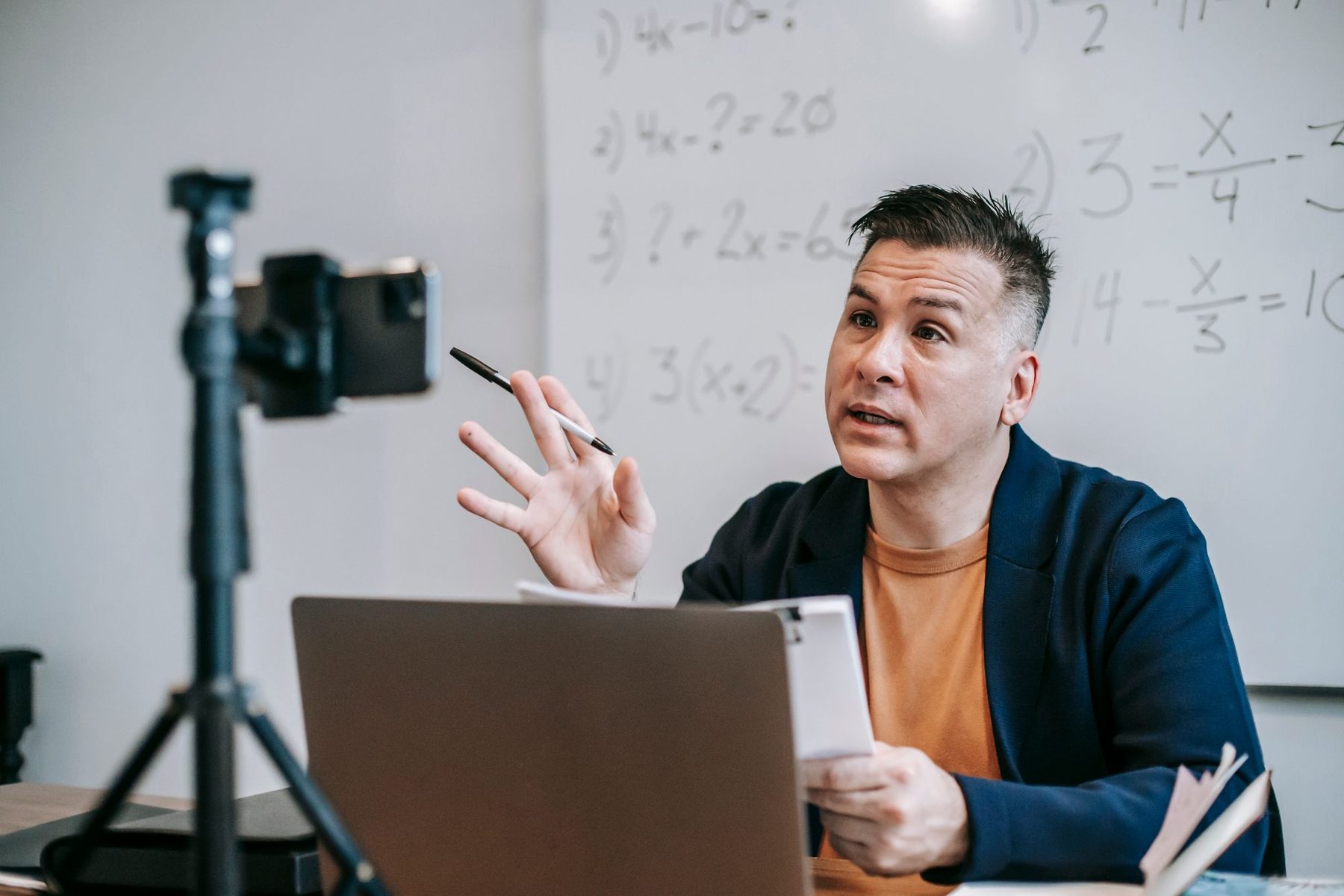
What is a hook in a YouTube video?
A hook is everything a viewer sees and hears before deciding to commit: usually the first 5 to 30 seconds of a long video and the first second or two of a Short. It covers the opening line, first shot, on screen text and sound, and it does three jobs: confirms the click, creates a reason to stay and signals quality.
YouTube’s advice has barely changed in fifteen years. Its 2011 Creator Playbook said to “tease the rest of the video so the audience is intrigued to see where you take them” (YouTube Blog, 2011); today’s Help Center says “build anticipation and curiosity to keep viewers watching” (YouTube Help).
Why YouTube hooks matter more for brands in 2026
Viewers arrive from feeds that make leaving effortless. Facebook research found people scroll 41% faster on a smartphone than on desktop (Marketing Dive). Attention is decided in moments, which is why every platform’s creative guidance centres on the opening.
What TikTok’s ad research says about the opening seconds
The most widely reported creator example points the same way. MrBeast’s leaked production guide, as summarised by developer Simon Willison in 2024, frames the first minute as the moment that “captures the viewer’s attention and demonstrates that their expectations from the thumbnail will be met”, and notes that losing 21 million viewers in the first minute after 60 million clicks was considered a reasonably good result (Simon Willison).
For brands there is an extra trap. Google’s analysis of thousands of TrueView ads across 16 countries found that “having a recognizable face in the first five seconds” tended to improve viewership and brand lift, but also that branding early showed “an inverse relationship between recall and engagement” (Think with Google). In other words, a logo first opening can help recall among those who stay while pushing more people to leave. Put a person and the payoff up front, and weave the brand into the story.
How to write a hook for a YouTube video in 6 steps
1. Start from the title and thumbnail promise
Write your hook after you have chosen the title and thumbnail. The first line should make the viewer think “yes, this is what I clicked for”. If the thumbnail shows a broken product, the first shot shows it breaking.
2. Find the single most interesting moment
Mark the strongest moment in your script or rough cut: the result, the surprise, the reveal. That moment, or a tease of it, belongs in the first ten seconds.
3. Open a curiosity gap
Psychologist George Loewenstein described curiosity as “a form of cognitively induced deprivation that arises from the perception of a gap in knowledge or understanding” (Loewenstein, 1994). Later brain imaging work found people spent more scarce resources to learn answers when they were more curious (Kang et al., 2009). Pose the question your video answers, then hold the answer back. One caution: the popular claim that people remember unfinished tasks better is weaker than often stated. A 2025 meta analysis found no memory advantage for unfinished tasks, only a general tendency to resume them (Ghibellini and Meier, 2025). That tendency to finish is what a good open loop uses.
4. Show before you tell
Lead with a face talking to camera, the product in use or the end result. Cut greetings, housekeeping and background; give context once the viewer has a reason to care.
5. State the stakes in one line
Tell the viewer what they get or what could go wrong: “By the end you will know exactly which of these three is worth your money.” Concrete stakes turn curiosity into commitment.
6. Test it against the data
Publish, then read retention in YouTube Studio for the opening, and for Shorts check the viewed versus swiped away report (YouTube Help). Our retention guide explains how to read the curve. As a rough vendor benchmark, vidIQ suggests around 60% of viewers still watching past the 30 second mark is good (vidIQ).
The best hook is a truthful preview of your best moment. Anything else is a promise the rest of the video has to apologise for.
25 YouTube hook examples brands can adapt
These are templates we use as starting points, written for brand channels. Swap the bracketed parts for your own product, audience and proof. They are illustrative, not quotes from published videos.
| Hook type | What it does | Best for |
|---|---|---|
| Question | Opens a gap the viewer wants closed | Explainers, how tos |
| Bold claim | Takes a position worth testing | Opinion, thought leadership |
| Result first | Shows the payoff, then rewinds | Product demos, transformations |
| Stakes or challenge | Sets a goal that might fail | Series, stunts, experiments |
| Cold open | Drops the viewer into the action | Documentary, behind the scenes |
| Confession or story | Starts with a human moment | Founder led and creator content |
Advertain guidance. Match the hook type to the promise in your title and thumbnail.
Question hooks
- “Why does [common product] stop working after [time]? We took ten apart to find out.”
- “What would happen if you [unusual use] every day for a month?”
- “Is [popular belief] actually true? Here is the test.”
- “What do [experts] know about [task] that the rest of us do not?”
Bold claim hooks
- “Most [category] advice is wrong, and this is the proof.”
- “You can do [result] in [short time], and you do not need [expensive thing].”
- “This is the one [tool] every [audience] should own.”
- “We spent [time] getting this wrong so you do not have to.”
Result first hooks
- “This is what [result] looks like. Here is how we got there.”
- “Before and after: same [thing], [one change].”
- “This took [time] to make. Watch the first attempt.”
- “Here is the finished [thing]. Now let us build it from nothing.”
Stakes and challenge hooks
- “We have [time] and [budget] to [goal]. If we fail, [consequence].”
- “Our team tried to [ambitious task] in one day.”
- “One of these [products] is ours. Can you tell which?”
- “We asked [number] [audience] the same question. The answers surprised us.”
Cold open hooks
- Open on the loudest, strangest or most beautiful shot in the film, with no voiceover.
- Start mid conversation: “…and that is when the whole thing collapsed.”
- Open on a problem in action: the spill, the queue, the error message.
- Start with a single line of on screen text that names the viewer’s frustration.
Story and confession hooks
- “Three years ago we nearly shut this company down.”
- “I have made this mistake more times than I want to admit.”
- “This is the email that changed how we make [product].”
- “Our customer [name] sent us this. We had to show you.”
- “Nobody on our team thought this would work.”


How long should a YouTube hook be?
There is no official length. For long form, aim to deliver the promise and open your main question within roughly the first 15 to 30 seconds, then move straight into the content. YouTube’s retention guidance is to “consider introducing the compelling content earlier in the video” because audiences shrink over time. For a 30 second ad or a Short, the hook is the first one to three seconds. TikTok’s research on ads found 90% of ad recall impact is captured within six seconds (TikTok), and Google built its six second bumper format on the same logic.
What is a hook in YouTube Shorts, and what changes?
YouTube’s Shorts guide is direct: “Capture attention in the first few seconds to prevent viewers from scrolling” (YouTube Blog, 2025). In practice that means the first frame must work as a thumbnail, there is no time for a spoken setup, and on screen text has to land in a glance. Start on motion or a face, put the question in text, and let the answer arrive by the end so the loop closes and the Short can replay.

Common YouTube hook mistakes brands make
| Common mistake | What to do instead |
|---|---|
| Logo sting or animated intro before anything happens | Open on a face, the product in use or the payoff; brand inside the content |
| “Hi everyone, welcome back to the channel” | Lead with the most interesting sentence you have |
| A hook that promises more than the video delivers | Make the first line a truthful preview of the best moment |
| Long context before the point | Give context after the viewer has a reason to care |
| Same hook on Shorts and long form | Rewrite for a swipe: one image, one line, under three seconds |
Advertain guidance based on the sources below.
A clickbait hook can lift clicks and still hurt the video; our click through rate guide explains why.
YouTube hooks checklist
- The first line confirms the title and thumbnail promise.
- A face, product or result appears in the first five seconds.
- One clear question or stake is set up before the 30 second mark.
- No logo sting, channel intro or greeting before the content.
- The brand appears inside the story, not as a gate in front of it.
- The hook is true: the payoff it teases is in the video.
- A separate Shorts version opens on motion with on screen text.
- Retention or swipe data is reviewed after publishing and the next hook is adjusted.
Want a team to plan, write and test hooks across your channel? Our projects show what that looks like, and you can talk to us any time.
Frequently asked questions
What is a good hook for a YouTube video?
One that confirms the viewer clicked the right video, opens a question they want answered and shows something worth watching within seconds, without overpromising.
Should a brand put its logo at the start of a YouTube video?
Usually not as a standalone sting. Google’s TrueView research found early branding can trade off against engagement, so build the brand into the opening action instead.
Can AI write YouTube hooks?
AI tools are useful for drafting variations. Choose and edit the final line yourself, check it matches the real payoff, and test it against retention data.