Every year the world's biggest consumer brands spend billions of pounds renting attention. A thirty second slot in the ad break. A double page in a glossy magazine. A roadside billboard. When the campaign ends, the attention ends with it, and next quarter the brand pays again.
Meanwhile the audience these brands most need, the next generation of shoppers, has quietly left the room. They are on YouTube, TikTok and Instagram, watching creators they chose, for hours a day. This report pulls together the latest data on where FMCG marketing money goes, where attention has moved, and what the brands getting it right are doing differently. It also draws on what we see every week on set with brands like L'Oréal, Red Bull, Gymshark and Formula E.
The short version
- The money is already moving. Social and digital platforms earned $413bn in global ad revenue in 2025. All of television earned $167.5bn.
- The young audience has gone. Fewer than half of UK 16 to 24s watch broadcast TV in a typical week. YouTube is now the second most watched service in the UK after the BBC.
- YouTube is the new television. It is the single biggest source of TV screen viewing in the US, and more than a billion hours of it are watched on TV sets every day.
- Most FMCG brands rent reach but own no audience. Household names with nine figure ad budgets have YouTube channels smaller than a mid sized creator.
- The winners behave like media companies. Red Bull, LEGO and Duolingo build audiences they own, and those audiences compound.
Where FMCG marketing money still goes
Advertising has never been bigger. WPP Media expects global ad revenue to grow 8.9% to about $1.3 trillion in 2026, and dentsu estimates that digital channels now take around 69% of all spend. Yet inside that shift, linear TV is standing still: dentsu forecasts 0.0% growth for linear TV this year, while connected TV grows 11.5% and social grows in double digits.
The fast moving consumer goods giants remain among the largest buyers of traditional media on earth. Their own filings show the scale.
| Company | Reported figure | Year | What it covers |
|---|---|---|---|
| L'Oréal | €14.18bn | 2025 | Advertising and promotion, 32.2% of sales |
| Procter & Gamble | $9.2bn | FY2025 | Advertising across TV, print, radio, digital and in store |
| Unilever | 16.1% of turnover | 2025 | Brand and marketing investment on €50.5bn turnover (about €8.1bn) |
| Coca Cola | $5.4bn | 2025 | Advertising expenses |
| PepsiCo | $5.4bn | 2025 | Advertising and other marketing, of which $3.4bn advertising |
| Mondelez | $1.66bn | 2025 | Advertising expense, down from $2.11bn in 2024 |
| Kraft Heinz | $1.07bn | 2025 | Advertising across TV, radio, print, digital, social and sponsorship |
Sources: company annual reports and 10K filings for 2025 (linked in Sources below). Companies define these lines differently, so treat them as scale, not a like for like ranking.
Much of this money still flows into formats built for a world of scheduled viewing: TV spots, sponsorships, print and out of home. Globally, platforms now take roughly two and a half times what all of television earns.
Global advertising revenue, 2025
The audience has already left the room
The clearest evidence comes from Ofcom, the UK media regulator. In 2017, 82% of 16 to 24 year olds watched broadcast TV in a typical week. By 2024 that had fallen to 45%. In 2024 this group watched just 17 minutes of live TV a day, but 39 minutes of YouTube. Ofcom's 2026 report puts their total broadcast TV viewing at around 22 minutes a day, against more than two hours for the population as a whole.
UK 16 to 24s who watch broadcast TV in a typical week
This is not a young person's quirk that fades with age. Every cohort that grows up with YouTube carries the habit forward. Ofcom's latest figures show weekly broadcast TV reach across all UK adults falling from 78% in 2022 to 70% in 2025, while YouTube viewing on the TV set itself doubled from 9 to 19 minutes a day over the same period.
Print tells the same story. Audited UK magazine circulation fell by an average of 8.6% in 2024, nearly half of titles dropped by 10% or more, and only 13 of 164 titles grew. The glossy page that premium brands have relied on for decades reaches fewer people every year.
Brands are still paying for the front row of a theatre the audience walked out of years ago.
YouTube is the new television
The biggest mistake brands make is filing YouTube under "social media" alongside quick posts and stories. Audiences do not treat it that way. In the US, Nielsen now measures YouTube as the largest single source of viewing on TV screens: 13.8% of all TV time in May 2026, ahead of Disney at 10.0% and Netflix at 8.0%. In May 2025 streaming passed broadcast and cable combined for the first time.
YouTube share of all TV viewing in the US
YouTube chief executive Neal Mohan has said that TV is now the main screen for YouTube viewing in the US, that more than a billion hours are watched on TV sets every day, and that Shorts average 200 billion daily views. YouTube's revenue passed $60bn in 2025, more than Netflix, and the platform says it has paid more than $100bn to creators, artists and media companies over four years.

The UK money has started to move
In 2025, for the first time, the UK's official advertising expenditure report tracked social media as its own category. The result was stark. UK advertisers spent £11.5bn on social media, up 21% in a year and more than double the £5.2bn spent on television. Social is now almost a quarter of the entire UK ad market.
UK advertising spend, 2025
Analysis from Guideline shows where money leaving UK linear TV actually goes: only 21p in every pound moves to connected TV, while the rest flows to social, search and retail media. UK linear TV ad spend fell 12% in 2025, and commercial broadcaster revenues fell again to £4.83bn.
The follower gap: reach you rent versus an audience you own
Here is the uncomfortable part. Spending on social is not the same as building on social. Most FMCG brands still use YouTube and TikTok as places to run ads, not places to build an audience. Compare the YouTube channels of traditional household brands with brands that behave like publishers, and with a few UK creators.
YouTube subscribers, 28 September 2026
A single group of UK creators, the Sidemen, has around 1,200 times as many YouTube subscribers as Walkers. Behzinga, one creator who hosts a series for Gymshark, has about 750 times as many as Dove's UK channel. These brands spend far more on marketing than any creator, but the creators own the attention.
Volvo: proof that YouTube works, without the audience to show for it
Volvo Cars is a good example of a premium brand at the turning point. Like most car brands it has long bought attention through cinema, print and sport. Its UK "Pulling Focus" campaign for the XC60 ran with Curzon cinemas across the big screen, print and streaming, and it has a five year sponsorship with the Boston Red Sox.
Volvo also knows YouTube works. Its global head of marketing, My Lindström, has described YouTube as "our biggest driver of brand consideration and incremental registrations, our leading indicator for sales performance". Google reports that the EX90 campaign, which combined a four minute hero film with creators including Marques Brownlee, delivered a 3.5x lift in search and doubled consideration.
Yet the Volvo Cars channel has 331,000 subscribers after 18 years on the platform, and its recent uploads earn between roughly 10,000 and 68,000 views each. The brand has proven the channel drives sales. It has not yet built the owned audience that would make that effect compound.
Dove Men+Care: World Cup reach, a UK channel of 1,310 people
Dove Men+Care runs big, expensive, well made campaigns. It has been the official personal care partner of the NCAA Men's Final Four and launched a FIFA World Cup 26 campaign in May 2026 featuring Marshawn Lynch, Trinity Rodman and Jordyn Woods. It has advertised in the Super Bowl.
On YouTube the picture is very different. The US channel has 75,500 subscribers. The UK channel has 1,310. Individual adverts on the US channel show millions of views, 9 million on one recent spot, against that small subscriber base. In our experience that pattern almost always means paid distribution: the brand bought the views, and when the media spend stopped, the viewers left. There is nothing wrong with paid media. The problem is paying for the same attention again and again.
Paid media is rent. A channel is a mortgage. One of them builds equity.
The brands that already behave like media companies
The brands at the top of the chart above made a different decision years ago: to act as publishers, not just advertisers.
Red Bull is the model everyone cites for a reason. Red Bull Media House runs more than 20 owned platforms, and the energy drink sold almost 14 billion cans in 2025. Its content is the marketing. LEGO has uploaded more than 51,000 videos and built one of the most watched brand channels in the world. Duolingo turned a mascot into a TikTok character with 18.2 million followers and told investors its "social first marketing strategy continues to deliver strong results" while its marketing costs fell as a share of revenue.
Gymshark grew revenue to £646m in its last financial year with a creator led model, running series such as "HIIT IT OFF" with creators rather than traditional adverts. And Feastables shows where this ends up: in 2024 MrBeast's chocolate brand reportedly made about $251m in revenue and over $20m in profit, while the media business behind it ran at a loss. Its leadership describes the content as "a marketing investment in everything else we do".
Unilever has fired the starting gun
The clearest signal that FMCG is changing came from the company that practically invented modern brand advertising. At a Barclays conference in March 2025, Unilever's plan to move social from about 30% to 50% of its media spend, and to work with around twenty times more creators, was put to chief executive Fernando Fernández. His answer:
"There are 19,000 zip codes in India, there are 5,764 municipalities in Brazil. I want one influencer in each of them." Fernando Fernández, CEO, Unilever
Fernández called it "probably the biggest change in our company going forward", noting that "today brands are by default suspicious". Unilever's 2025 results describe an accelerated "shift to social first demand generation" led by Dove and Vaseline, with brand and marketing investment at 16.1% of turnover, its highest in more than a decade.
The early numbers are strong. Unilever says its House of Fresh campaign across Dove, Dove Men+Care, Rexona and Axe worked with more than 2,100 creators, produced 6,000 pieces of content, reached 2.5 billion people and earned a 16% engagement rate against an industry norm of 5%. Its chief marketing officer, Leandro Barreto, now describes creators as "co authors of our brands, not simply channels of distribution".
The reason is trust. Research commissioned by Google with Kantar found that 79% of US Gen Z viewers trust creator recommendations on YouTube, and that across 20 CPG brands creator content delivered 2.3 times the long term return on ad spend of paid social. It is vendor research, so treat the exact figures with care, but the direction matches everything we see.
The creator economy is now a media channel
Creators are no longer a line item inside the social budget. They are becoming a channel in their own right. Goldman Sachs values the creator economy at around $250bn and expects it to reach $480bn by 2027. In the US, the IAB forecast creator advertising at $37bn in 2025, growing four times faster than the media market overall, and 48% of buyers now describe creators as a "must buy".
US creator advertising spend
Rented attention versus owned attention
This is the heart of the argument. A TV campaign, a magazine page and most paid social ads deliver attention only while the money is running. An owned YouTube channel works differently. Every good video keeps earning views from search, recommendations and new subscribers for years. The back catalogue becomes an asset.
Rented versus owned attention (illustrative)
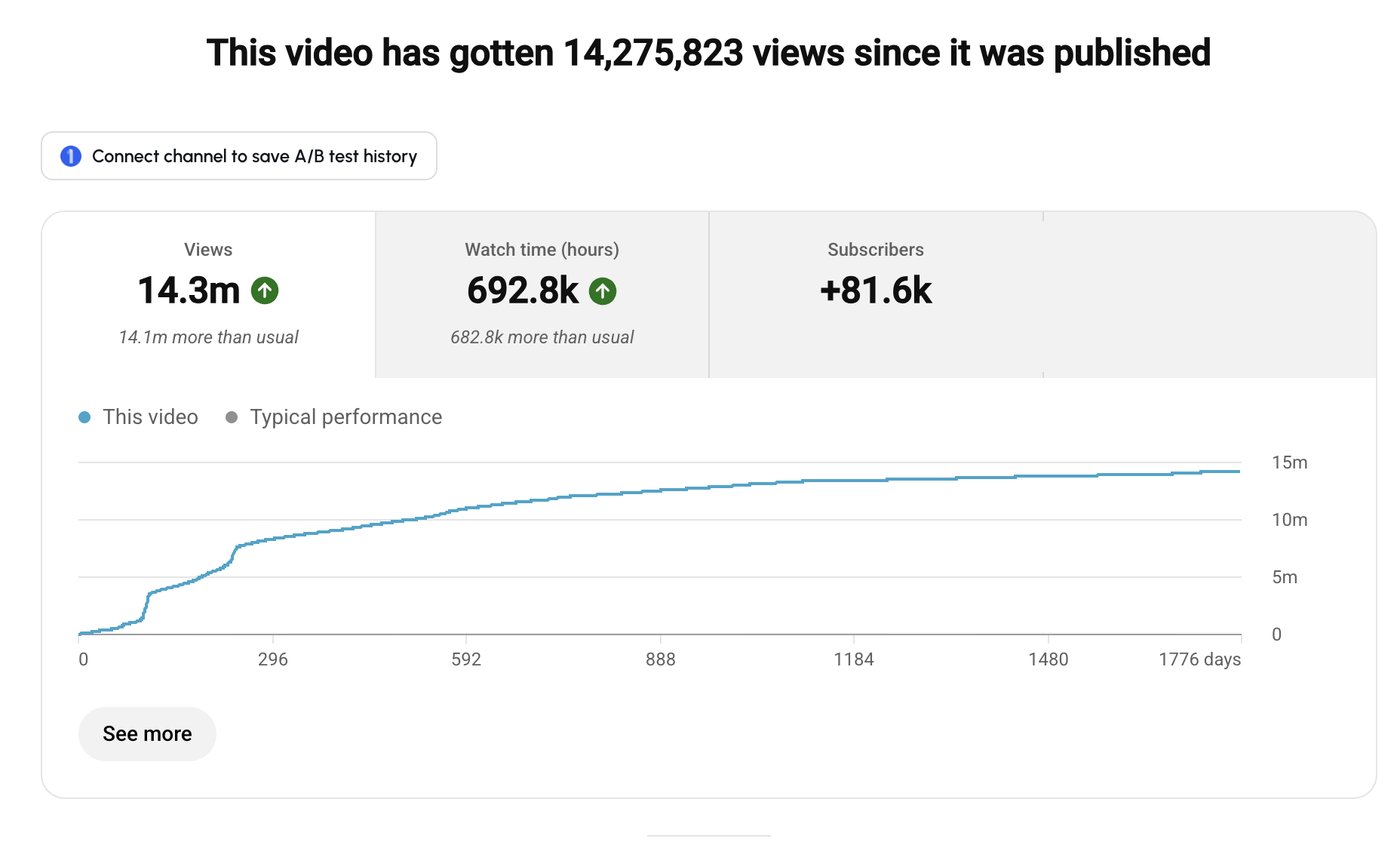
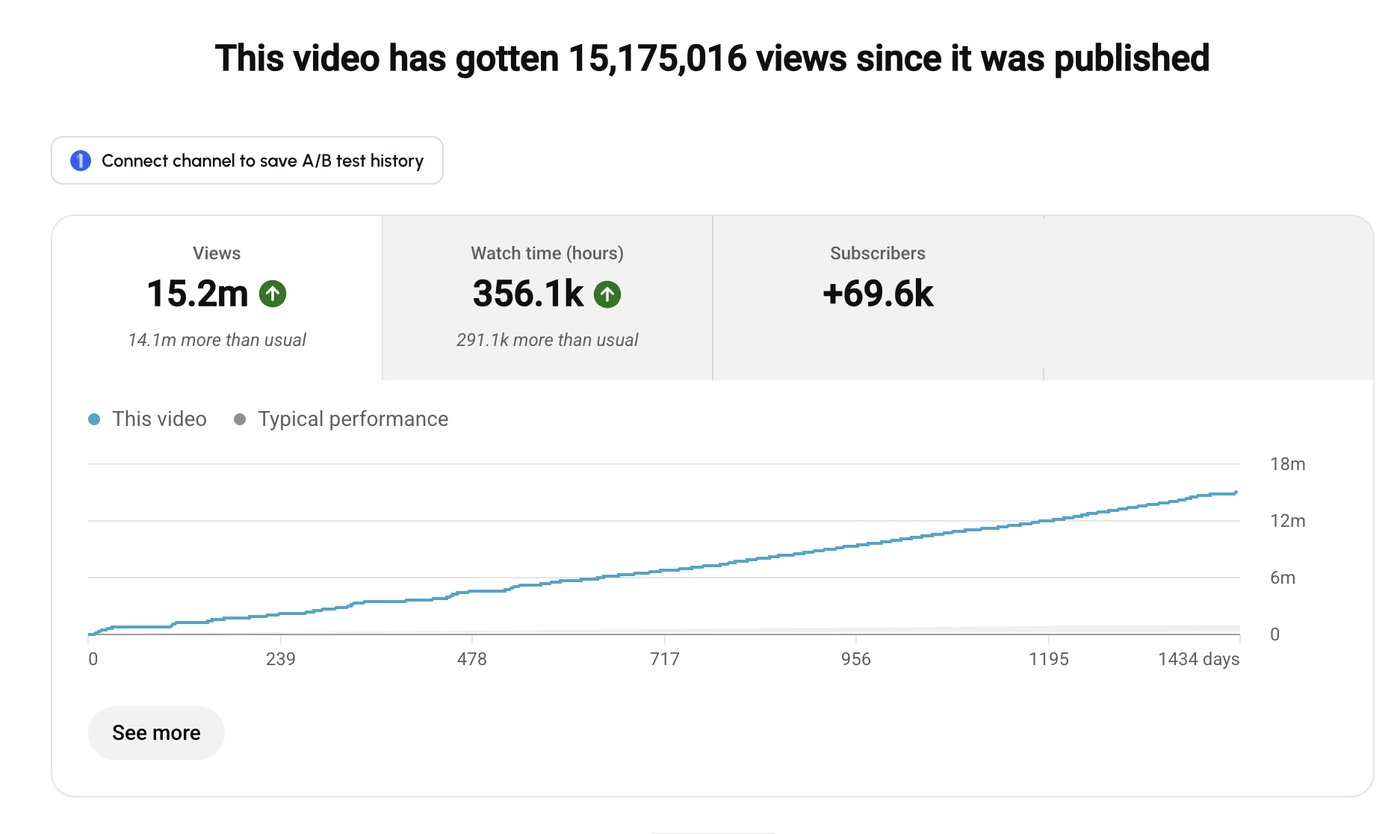
This is not theory for us. The four videos below were made years ago. Between them they have earned 61 million views and more than 424,000 subscribers, and every curve is still climbing. No brand would get that from a TV spot that aired once in 2019.
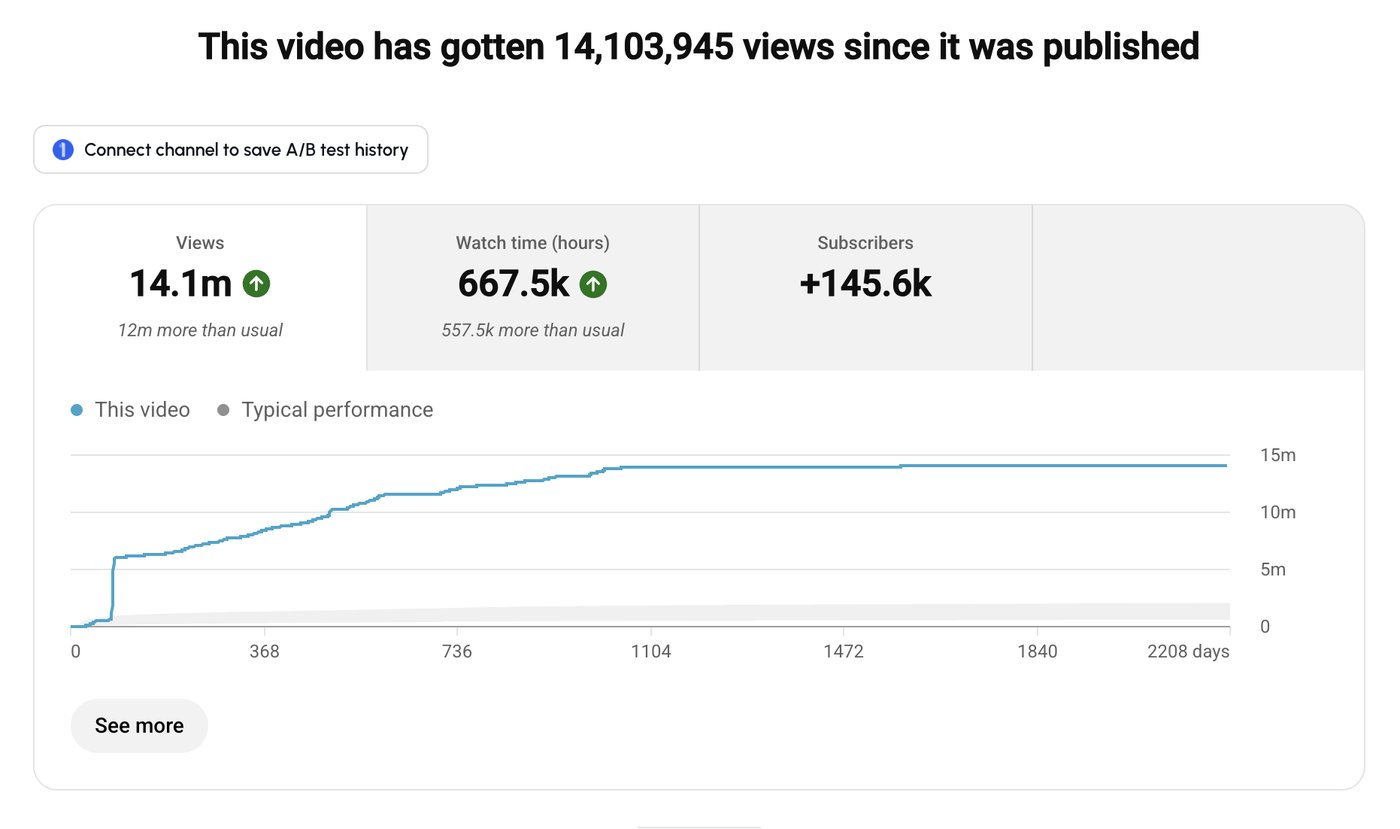
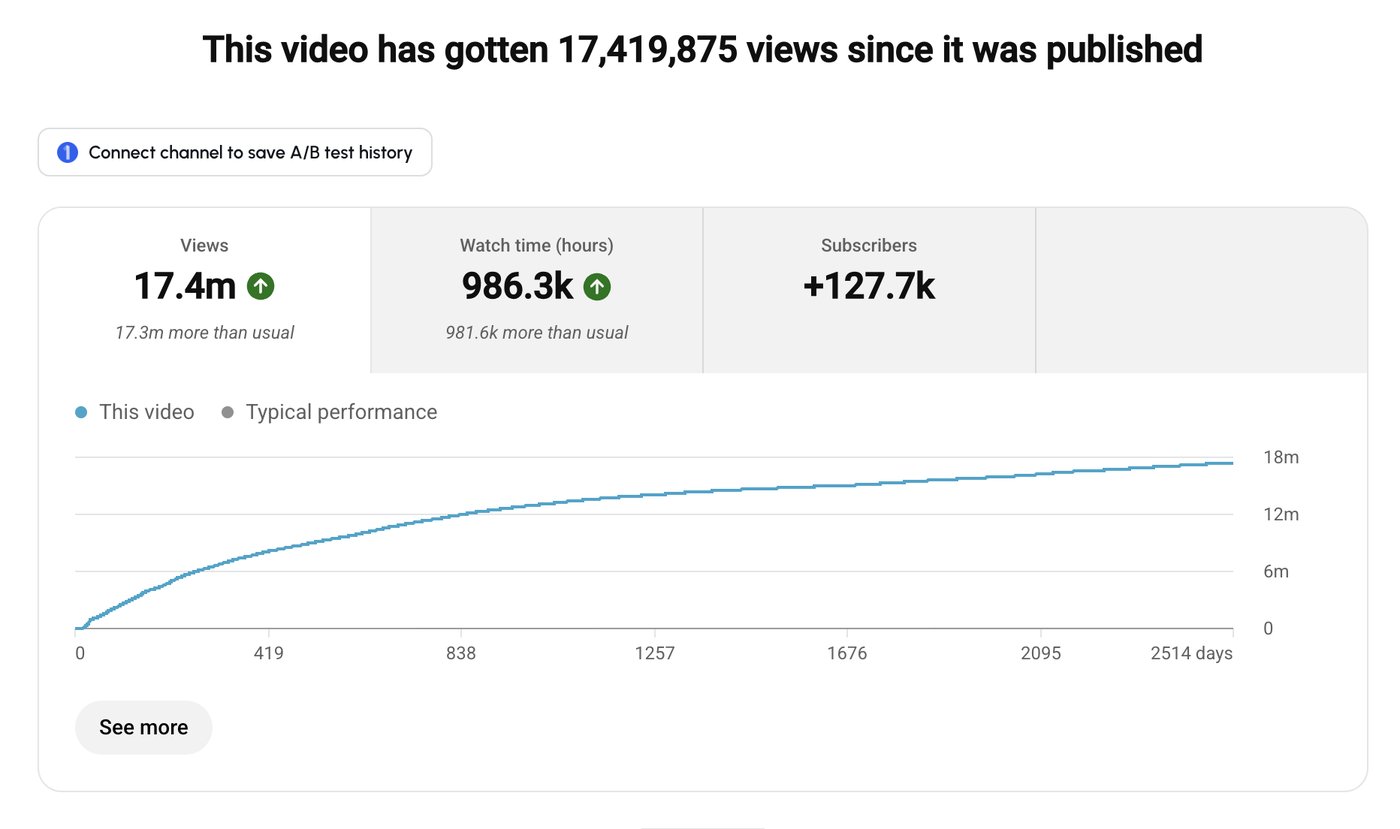
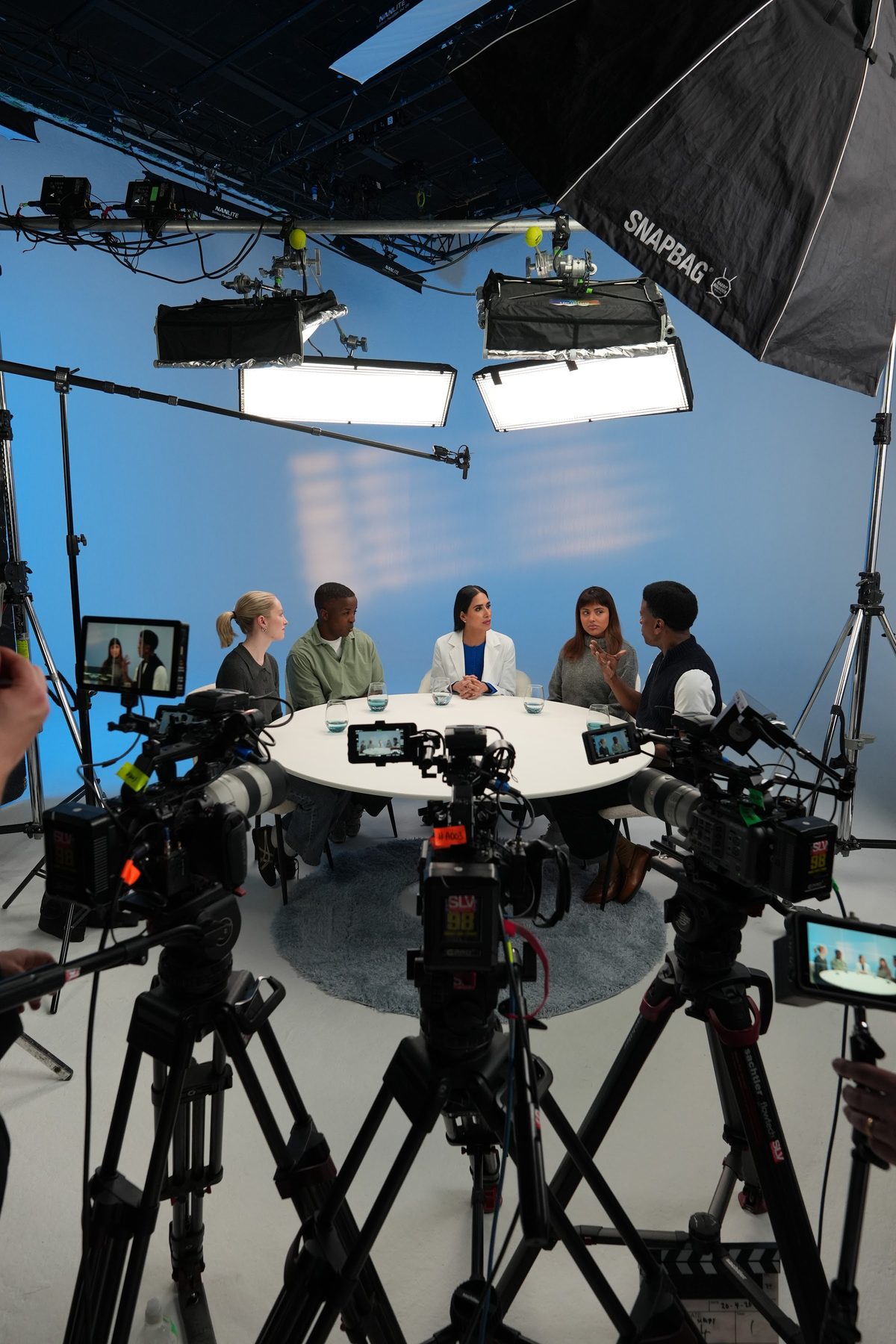
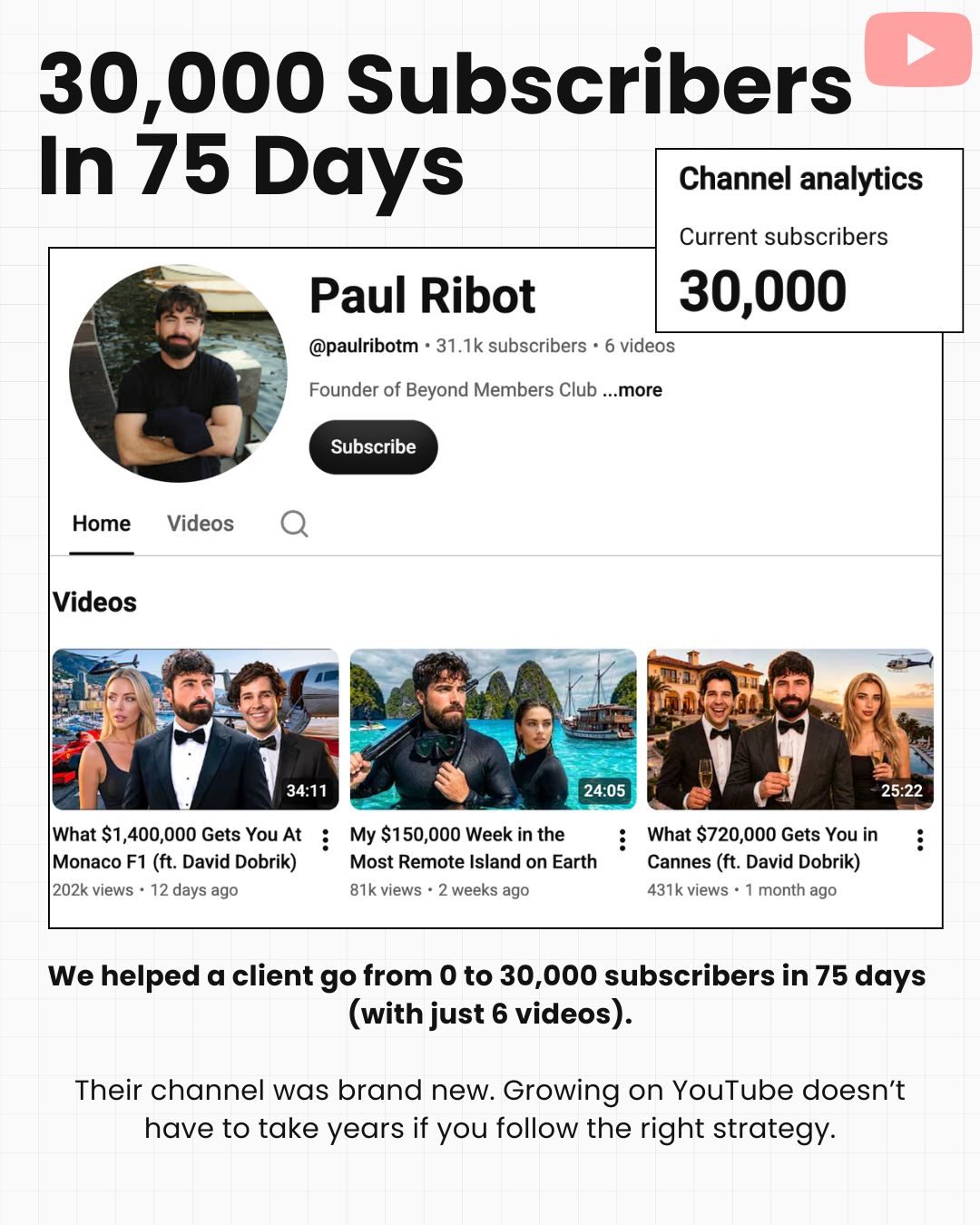
The same thinking works for new channels. For Paul Ribot, founder of Beyond Members Club, we took a brand new channel from zero to 30,000 subscribers in 75 days with just six videos.
What we see from the inside
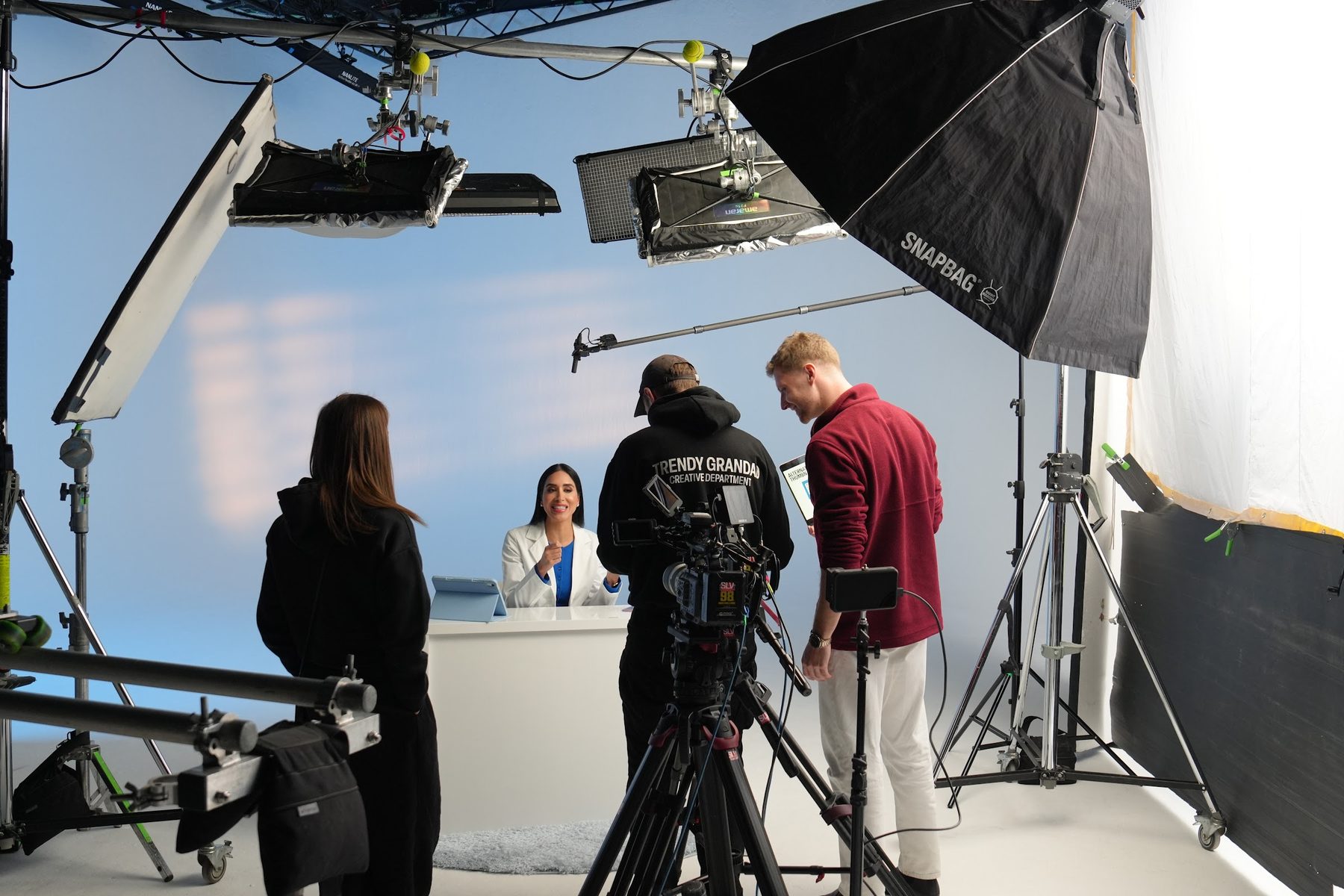
At Advertain we sit between the brand and the audience every day, on projects for L'Oréal, Red Bull, Gymshark, Formula E, Sony, Burberry and more. A few patterns repeat every time.
- The creative is rarely the problem. Most brand content is beautifully made. It fails because it is built like an advert, not like a video someone chose to watch.
- Brands underestimate packaging. The title and thumbnail decide whether a video gets watched at all. Brands spend weeks on the edit and minutes on the thumbnail.
- Series beat spots. Viewers subscribe to a show, not a campaign. Recurring formats compound.
- When it works, it is huge. Our work for Formula E has passed 32 million views, and for the US Playing Card Company more than 132 million.
A playbook for FMCG brands
For a CMO or brand director reading this, here is where we would start.
1. Move money from renting to owning
You do not need to switch off TV tomorrow. Carve out a fixed share of the media budget, even 10% to begin with, and put it into building owned channels rather than buying more impressions.
2. Build a channel, not a campaign
Treat YouTube as a TV network you own. Give it a clear promise to the viewer, a publishing rhythm and someone accountable for audience growth, not just campaign reach.
3. Make series, not spots
Find the recurring format your audience would watch even if your logo were not on it. Red Bull does not make energy drink adverts. It makes stunts, sport and stories that happen to carry the brand.
4. Make creators co authors
Follow Unilever's lead and let trusted voices speak for the brand. Give creators the brief and the freedom, not the script.
5. Measure what compounds
Track subscribers, returning viewers, watch time and search demand alongside reach and frequency. These are the numbers that show an asset being built rather than a budget being spent.
What happens next: our predictions to 2030
These are our views, based on the data above and what we see in the market.
- Every major FMCG brand will run at least one owned YouTube series by 2030. The ones that start now will have a five year head start in subscribers and back catalogue.
- TV and YouTube budgets will merge. As more YouTube is watched on the living room TV, the line between "TV" and "social" budgets will disappear.
- Creator led brands will keep taking shelf space. Feastables and Prime showed that an audience can launch a product faster than distribution deals can.
- Channel size will become a brand health metric. Boards will ask why a brand with a nine figure budget has fewer subscribers than a teenager.
Frequently asked questions
How much do FMCG brands spend on advertising?
The largest spend billions each year. In their 2025 filings, L'Oréal reported €14.18bn on advertising and promotion, Procter & Gamble $9.2bn on advertising, and Coca Cola and PepsiCo about $5.4bn each. Unilever invested 16.1% of its €50.5bn turnover in brand and marketing.
Is social media advertising bigger than TV advertising?
Yes, in the UK and globally. UK social media ad spend reached £11.5bn in 2025 against £5.2bn for TV. Worldwide, social and digital platforms earned $413bn in 2025 compared with $167.5bn for all television.
Do young people still watch TV?
Far less than before. Ofcom found only 45% of UK 16 to 24s watched broadcast TV in a typical week in 2024, down from 82% in 2017, and they watched more YouTube each day than live TV.
Why should FMCG brands invest in YouTube specifically?
Because it combines TV scale with owned audience. YouTube is the largest source of TV screen viewing in the US, videos keep earning views for years through search and recommendations, and subscribers give a brand an audience it does not have to rent again.